

Life Scientist/Environmental Engineer/Physical Scientist
Environmental Protection AgencyThis position is in Region 4, Air and Radiation Division, Air Planning and Implementation Branch, Air Regulatory Management Section. About Region 4: Region 4 This is an office-centered position--you must physically report to the duty station stated in this announcement on a regular basis.You will: Integrate regional concerns in national program/policy development of issues related to the six criteria pollutants (i.e., that lead carbon monoxide, fine particulate matter, ozone, sulfur dioxide and nitrogen dioxide NAAQS), and related issues for interstate transport and visibility. Represent the Region in dealing with Headquarters, other Regions, other agencies (Federal and nonfederal), industry and the public at national and regional meetings, EPA/state negotiations, EPA/industry consultations, and at public meetings on issues related to the six criteria pollutants, visibility, and interstate transport. Serve as the regional expert on State Implementation Plan (SIP) issues regarding permitting, modeling, and monitoring, as well as impacts on the environment and the strategies for its abatement. Provide assistance in implementingresponsibilities for SIPs which require the regulations and achievement of reductions in emissions for the attainment and maintenance of the National Ambient Air Quality Standards (NAAQS), and interstate transport and visibilityrequirements for all pollutants. Serve as the principal reviewer and technical expert/advisor to other reviewers of NAAQS control strategies and SIP revisions, as well as issues related intestate transport and visibilityrequirements for all NAAQS. You will spend 25%-50% of your work time on contracts, grants/cooperative agreements, and/or interagency agreements. One or more positions may be filled (in the organization advertised and/or in other organizations), if appropriate to the position.
Opens the company's application page
Listed via
USAJobs
usajobs.gov
Similar roles

Design & Tech
Related reads from TCHNX

The Emergence of Small Language Models: Why Efficiency Is Overtaking Scale
As the AI industry confronts computational costs and environmental concerns, a new generation of compact models is proving that bigger isn't always better. Small language models are reshaping enterprise AI deployment.

Algorithmic Bias in Design Systems: Why Your AI-Generated UI Might Exclude Users
As AI tools increasingly generate interface components, they're embedding biases that systematically exclude users. Understanding how machine learning models inherit prejudice is essential for creating truly inclusive design systems.
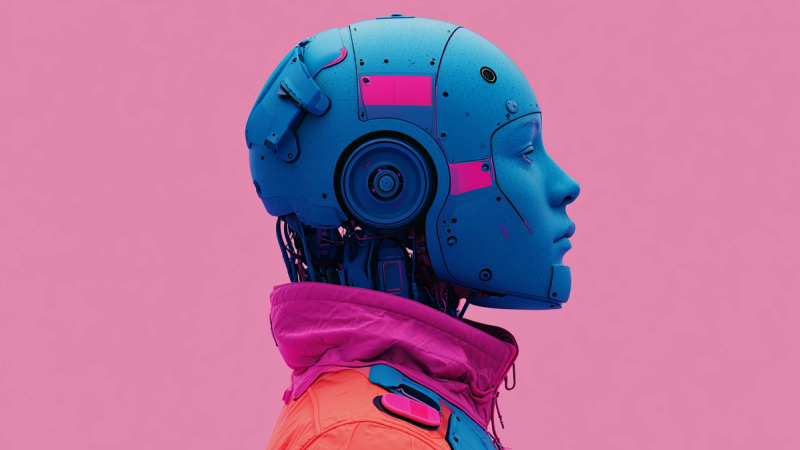
The Synthetic Design Problem: Can AI-Generated Assets Ever Replace Human Creativity?
As AI design tools flood creative workflows, a fundamental question emerges: are we automating creativity or merely industrialising pastiche? The answer reshapes how we understand design innovation itself.